

Mineral guide
Magnesium: The Mystery Mineral Made Practical
Magnesium is involved in hundreds of body processes. The practical question is whether your daily routine supports enough of it.
The magnesium reset
1
Review intake
2
Connect the signals
3
Support consistency
Use this as a practical reset, not a perfection project. The win is a better next step you can repeat.
Overview
Magnesium is an essential mineral involved in more than 300 biological processes. It matters for muscles, nerves, sleep, energy metabolism, and overall wellbeing.
Magnesium, The Mystery Mineral
Magnesium is an essential mineral that is involved in 300+ biological processes in the body. In other words, you need magnesium to stay healthy!
Many are unaware of how vital magnesium is to their health and wellbeing. There was a time when most of the magnesium needed by the body was found in the foods we ate. Today, studies show that a large percentage of the population do not get the minimum recommended amount of magnesium through their diet … sometimes providing as little as 50 percent of the amount necessary for good health.
Sufficiency vs. Deficiency
The question: Is your diet providing a sufficient amount of magnesium each day for you to enjoy good health, or are you part of the group who are unaware of a magnesium deficiency in your body?
“On the other end of mere ‘suffichttp://magnesiumiency' lies a deficiency of magnesium. This is dangerous for the nervous system, heart and kidneys. Many people have strokes and heart attacks even though they have no high cholesterol and no high blood pressure. Why? They have nutritional deficiencies specific to the human heart.
As a single essential (heart and high blood pressure) nutrient, lack of magnesium may be responsible for more diseases than any other nutrient — our diet of white flour, white sugar and prescription drugs destroys magnesium. Magnesium is the most critical mineral required for the electrical stability of every cell in the body. With few exceptions, low or deficient DHEA magnesium is found in every illness. The majority of Americans lose 80-90% of their DHEA magnesium between the ages 30 and 80, accelerating the aging process. In perhaps no illness is magnesium deficiency more relevant than myocardial infarction (and high blood pressure) or acute heart attack and aging.
But there’s more danger to the body if your magnesium levels are low. The mineral is used by every organ in the body and especially by the heart, muscles and kidneys. Researchers have detected more than 3,751 magnesium-binding sites on human proteins. It is found in more than 300 different enzymes in the body.” — Dr. Bob Livingston
Nutritional Supplements
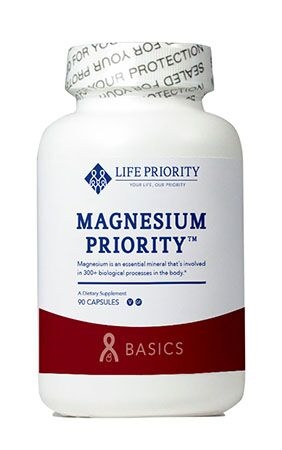
There are several forms of magnesium available in nutritional supplements. Magnesium Priority™ by Life Priority® contains magnesium biglycinate, a form that is easier to absorb and won’t cause digestive issues (as some other forms of magnesium can). (For more information, please visit: www.LifePriority.com.)
Daily Diet
Useful reset points
Why it matters
Magnesium is quiet until the routine is missing it
Because magnesium is involved in so many processes, intake can influence how people think about sleep, muscle comfort, stress, and recovery.
Food first
Start by looking at the plate
Nuts, seeds, leafy greens, legumes, and whole grains can contribute magnesium. Busy routines and processed diets may leave gaps.
Support
Supplementation should fit the person
Forms, doses, timing, and tolerance vary. Talk with a professional if you have health conditions, medications, or persistent symptoms.
If you are relying on your daily food intake to supply your minimum daily magnesium requirements, here’s some information to consider. There is a magnesium deficiency present in our nation which has occurred due to a number of things, including the commercial food industry, nutritionally depleted soils in which our foods are grown, and overcooking of our foods. Today’s fast-paced, busy lifestyle can lead to quick, “easy” choices that include fast food options, processed foods, and refined grains. These lifestyle choices sometimes overlook the importance of leafy green vegetables, legumes, nuts, seeds, and bananas, which provide magnesium and other essential nutrients from natural sources in one’s daily diet.
Magnesium Deficiency
Proper levels of magnesium are directly related to your health. Some signs of possible magnesium deficiency can include:
- Muscle cramps
- Calcium deficiency
- High blood pressure
- Type II diabetes
- Potassium deficiency
- Respiratory issues
- Poor memory
- Poor heart health
- Difficulty swallowing
- Inflammation
- Osteoporosis
Facts
- Poor natural foods, processed foods, medications, aging, stress and disease are all factors that can cause us to be magnesium-deficient.
- The nutrition provided by the crops we consume has declined significantly since then. According to a study published in the Journal of the American College of Nutrition, the nutrient content of crops had declined by as much as 40 percent between 1950 and 2004 when the study was conducted. The declines were related to efforts to create crops that grew faster, yielded more and resisted pests. Imagine what it’s like now.
- "Emerging evidence suggests that when you select for yield, crops grow bigger and faster, but they don’t necessarily have the ability to make or uptake nutrients at the same, faster rate," said lead researcher Dr. Donald Davis.
- Another study published in Nutrition and Health found that magnesium levels declined by 24 percent in vegetables, by 17 percent in fruit, by 15 percent in meat and by 26 percent in cheeses over the period from 1940 to 1991.
- Not only do most of the foods we consume today offer zero magnesium; some even contribute to leaching magnesium from the body.
- Carbonated beverages contain phosphates that actually bind with magnesium in the digestive tract, rendering it unavailable to the body.
- Foods processed using refined sugars are "anti-nutrients" that actually consume nutrients during digestion, resulting in a net loss of nutrients.
- Caffeinated beverages cause the kidneys, which filter and excrete minerals, to release extra magnesium.
- Alcoholic beverages also cause the kidneys to excrete extra magnesium.
- Many prescription medications — particularly heart and asthma medications, birth control pills, estrogen replacement therapies and diuretics — cause the kidneys to excrete magnesium.
This information is presented to help you understand the importance of proper nutrition and the benefits of quality supplements. Consult your health care provider to determine how you can live your best life starting today!
Life Priority products are not intended to diagnose, treat, or cure any medical condition. Information is provided for educational purposes only. Rev 6/12
Life Priority Inc. 11184 Antioch Rd. #417 Overland Park, KS 66210433
913.438.5433 800.787.5438 www.lifepriority.com
Practical takeaways
Ways to apply it
Food sources
- Leafy greens
- Nuts
- Seeds
- Legumes
Watch areas
- Sleep
- Muscles
- Stress
- Recovery
Support
- Magnesium
- Calcium
- Hydration
- Routine
Helpful support options
Match support to the real goal
Recovery rhythm
Magnesium Priority fits routines focused on muscles, stress recovery, and evening consistency.
View MagnesiumMineral foundation
Calcium Priority can fit routines focused on bones, muscles, and healthy aging fundamentals.
View CalciumSleep and recovery
Productive Sleep can help support an evening routine when recovery is the missing piece.
View SleepStrength span
Muscle Memory supports movement-focused routines for strength, capability, and healthy aging.
View Muscle MemoryCommon questions
Is magnesium only for sleep?
No. Sleep is one common use case, but magnesium is involved in many body processes.
Can everyone take magnesium?
Not necessarily. People with health conditions or medications should ask a healthcare professional first.
Next step
Build a routine around your actual priority
The supplement quiz can help turn a broad wellness goal into a more focused routine.